
Deciphering the Game Mechanics Underlying Cash or Crash Live
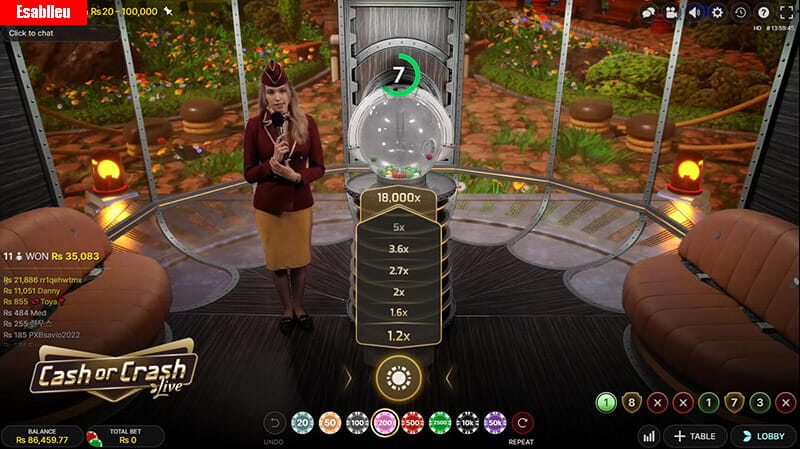
The game Cash or Crash Live creates its own niche in the live game show world https://cashorcrashcasino.com/. Its charm is found in a powerful blend of stage show and game rules that transforms every round into a test of your nerves. This is no a mere spin of a roulette table. In this game, you take the driver’s seat, actively deciding that directly control what you win. The concept draws you in with an increasing multiplier, then urges you to cash out before a hidden “crash” wipes the slate clean. To get the most out of the game, you should see beyond the flashy show and grasp its real function. Let’s break down the stages, the host’s function, the mathematics of risk, and the strategies players can use to manage the excitement.
The Main Goal and Basic Flow

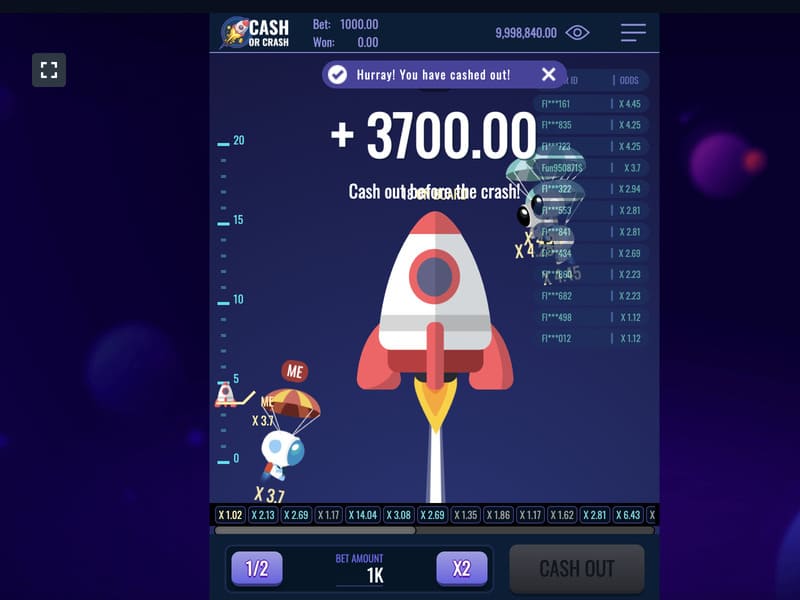
The objective of Cash or Crash Live is straightforward on the appearance. You must determine when to withdraw a rising multiplier before a concealed “crash point” ends the turn and claims your winnings for that stage. All game begins with players placing bets. A rocket then starts its journey, and a multiplier starts increasing from 1x. The journey has various stages. Before launch, a unknown crash multiplier is determined for every stage, secret from nobody. As the value increases, each player chooses to hit “Cash Out,” locking in that multiplier on their wager, or to stay on board. If the rocket triggers the secret crash point before a player withdraws, they lose their bet for that phase. This pattern of risk and reward happens over multiple stages. Surviving players grow their profits incrementally.
Deconstructing the Game Stages
Consider the game as a sequence of separate sections, each a new gamble. Surviving a crash doesn’t remove you from the game. You move to the following stage with your collected winnings safe, then start the risk process from scratch on the next leg of the rocket’s path. This structure is critical. It generates a narrative, with tension that builds as you progress. The announcer amplifies the tension, announcing how many players are still riding the rocket as the multiplier reaches impressive values. Initial phases often feature cautious plays. Subsequent phases, with their high-stakes multipliers, entice you to risk the winnings you’ve already secured. This segmentation is the heart of the game’s appeal. It forces a series of separate, stressful decisions instead of only one.
From Low to High Risk: The Increasing Danger
Pay attention to the colored trajectory the rocket takes. It’s a key part of the game’s visual lexicon. The opening segment is usually a “Green Zone,” a safer phase where a crash is still a possibility. Next, the rocket might reach an “Amber Zone,” a clear signal that hazard is increasing. The final stretch is the “Red Zone.” At this point, multipliers are their most attractive, but the chance of a crash is numerically at its peak. Those hues are not merely cosmetics. They offer a immediate indicator for the degree of risk at any moment. They make an intangible probability become concrete. Realizing the game is purposely alerting you about growing risk is a critical piece of strategic information.
Methodological Structures and Player Psychology
No strategy can defeat the inherent randomness. But you can employ systematic techniques to manage your funds and your mental state. The main conflict is a compromise. Do you secure fixed returns, or shoot for massive gains? Users often employ methods like the “Fixed Cash-Out.” Here, you choose ahead of time to cash out at a certain multiplier, say 2x, in every phase. This seeks consistent, small wins. The opposite is the “Let It Ride” style, where you gamble many phases for a opportunity for a huge reward, recognizing that failures will occur. A more strategic method is the “Percentage Bankroll” technique, where you adjust your wager amount based on your existing gains. The most important element, though, is in your mind. Can you resist the “greed factor” when the payout soars? Can you escape frustration after an early crash? Your greatest asset is establishing clear boundaries for yourself before the session even starts.
Common Pitfalls to Evade
Watch out for a few common errors. The most damaging is “chasing” a crash. This means impulsively boosting your wager after a loss, which violates the system’s stage-independent structure. Another mistake is falling for the “hot hand” fallacy, thinking a streak of big payouts is likely to continue. Permitting the host’s chatter or the moves of other participants distract you from your own established approach is frequent. Also, do not misunderstand the sections. The Amber and Red Zones are not tests to conquer. They are warnings that the risk has spiked. Starting any phase without a defined objective converts the session from a series of choices into a complete emotional journey. That journey rarely ends well.
The function of the presenter and RNG
The on-air host goes beyond talk. They establish the game’s emotional pace. While they can’t affect the result, they skillfully build suspense. They shout out the climbing multiplier and provide live updates on what percentage of the crowd is cashing out at each level. That social cue can play tricks on your head. But remember, the host works separately from the game’s engine: the Random Number Generator (RNG). The crash point for each stage is determined by a certified RNG the instant the stage begins. This ensures fairness and total unpredictability. The host has no clue when the crash will happen. Their job is entertainment. The RNG’s job is certifiable fairness. This combination combines transparent live action with provably random results.
Theoretical Basics and Volatility
Let’s look at the figures that power the game. The multiplier for every round is derived from a fixed probability distribution. Frequent, small multipliers for instance 1.2x or 1.5x are very likely to occur. Sky-high multipliers can occur, but are exponentially more rare. This model maintains the game fair. The common, minor crashes finance the infrequent, massive possible wins. The player payout percentage is a statistical percentage over millions of games. During one session, the swings are extreme. You’re not playing against the casino in a standard manner. You are making decisions against a hidden, random number. Keep these key facts in mind:
- Isolated Stages: Each stage’s crash point is its own event. A crash at 1.2x in stage one tells you nothing about stage two.
- No Forecasting Ability: The RNG rules out any predictable sequences. Previous crashes or large wins do not affect future rounds.
- House Advantage: The game is designed with an inherent house edge, which is shown in the publicly disclosed RTP from the provider.
Finale: A Blend of Chance and Selection
Cash or Crash Live is a compelling combination of sheer fortune and intentional choice. Its workings are built to craft a story of escalating risk, fueled by a transparent RNG and brought to life by a charming emcee. Defining winning as a entertaining and possibly lucrative session hinges on a few things. It’s less about predicting the uncertain and instead about grasping how the game is constructed. It requires controlling your funds with restraint and controlling the emotional urges the game masterfully provokes. By learning its stages, understanding its numeric basis, and following a custom plan, you can change your experience. You transition from confused guesswork to enlightened participation in a uniquely tense live game show.