
My Journey with Boomerang Casino Cookie Management in UK

I dedicate a fair bit of time playing at online casinos, and as time went on I’ve begun to pay greater heed to the record of information I leave in my wake. My examination of casino boomerang interface Casino’s cookie system wasn’t born from idle curiosity. I wanted a true insight of what became of my information each time I logged in to play. Here is a breakdown of their real cookie configuration, from the essentials you cannot skip to the decisions they truly permit.
Why Cookie Management Is Important to Me as a Player
I previously considered those cookie pop-ups as nothing but a speed bump, something to dismiss so I could reach the slots. That shifted when I genuinely considered about what I engage in on a casino site. My login information, when I log in, and the games I prefer are all important. Managing cookies is the primary way I can put a hand on the wheel of that data flow.
Getting a grip on Boomerang’s method became crucial for my own comfort. It’s not just about them checking a compliance box. It’s about how much I can rely on them. A clear cookie policy shows me the platform views me as a person with preferences, not just a data point. That basic trust affects how at ease I feel when I deposit money or prepare for an evening of play.
Good cookie control also influences my time on the site. I wanted to know which cookies kept the lights on and which were following me for ads or analytics. With that insight, I could modify my experience, maybe cut down on distracting prompts and just pay attention to the game. It restores my control.
My First Encounter with the Boomerang Casino Cookie Banner
My early meeting with Boomerang’s cookie banner was simple enough. It showed up front and centre on my first visit, explaining its purpose clearly. It didn’t try to nudge me into accepting everything, a dark pattern I’ve seen on other sites. The options were there, though I had to take an extra step to modify them.
The wording was good. It was clear and stayed away dense legalese. The banner said, in plain English, that cookies would be used for site functionality, for tailoring things, and for analytics. That upfront honesty was a good start. It meant our relationship began with me giving informed consent, not having it assumed.

But I wanted to see how detailed the choices could be. The ‘Accept All’ button was easy to spot, so I headed for the ‘Preferences’ section instead. This is where any cookie system demonstrates its value. I wanted to see if I could turn off certain types of tracking without the site malfunctioning, a request that often causes problems.
Navigating the Customization Panel
Inside the customization panel, I found a layout arranged into categories. The cookies were grouped as essentials, performance, analytics, and marketing. The essential ones were already ticked and greyed out, which is standard. You need those for basics like maintaining your session and keeping your session secure.
Each group came with a short, informative description of what those cookies actually do. For the analytics category, it said they helped understand how players move through the site. Having that context right there meant I could decide without sifting through a fifty-page policy. I just flicked a switch on or off.
The Clarity of Storing Preferences
I made my choices and hit confirm. The banner went away and I was into the casino lobby. A key part of this was knowing the site would retain what I’d chosen next time I came back. That’s a technical and ethical requirement, and from what I saw, Boomerang Casino got it right.
Later on, I cleared my browser cache to check. When I returned, the banner showed again as it should, but when I clicked into the preferences panel, my previous selections were still there. It showed the system was built properly, actually respecting my decisions over time.
The Technical Perspective: What Cookies I Really Found
I went a step further and employed my browser’s developer tools to examine what cookies Boomerang Casino set under varying settings. With just essentials turned on, the list was limited. They were largely session cookies with technical names, essential for maintaining my login as I moved from the lobby to a blackjack table and back.
When I permitted analytics cookies, I noticed fresh ones from tools like Google Analytics. These didn’t interfere of playing, but they enabled the casino to collect data on how pages performed. Critically, I didn’t see any third-party advertising cookies emerge except if I explicitly said yes to the marketing category.
The true test was saying no to everything but the essentials. The site remained functional without issues. I could play games, manage my account, and carry out transactions without a hitch. This showed that Boomerang had created a adhering setup where the supplementary services weren’t pushed on me. The experience was clean, just the gaming service I desired.
Striking a balance between Personalization with Privacy: Your Choices
This is the modern user’s delicate dance. I like it when a site recalls my language or directs me towards a game I might appreciate. That benefit demands cookies watching what I do. My job was to establish a middle ground where I received some useful support without sensing like I was under a microscope.
I ended up enabling performance and analytics cookies, but I kept marketing cookies off. This allowed the site to gather data to fix bugs and enhance load times, which helps me in the end. The analytics provided them a idea of which games were popular, which could lead to a better variety for everyone. That was a compromise I could live with.
Turning off marketing cookies was my line against targeted ads from Boomerang and its partners on other websites I visit. That’s a individual call. Some players might like seeing tailored bonus offers, but I’d rather discover promotions myself in my account or through newsletters I’ve opted into.
Having this granular choice was what mattered. It moved control from the platform to me. I wasn’t trapped with a take-it-or-leave-it decision. Over a few weeks, I modified my settings a couple of times to see what happened. The system reacted every time, with no argument.
The way Cookie Settings Impacted My Gaming Sessions
With my settings set, I watched for any tangible changes during my play. The largest difference was simple: I ceased to see Boomerang Casino ads tracking me on other websites and social media. My general browsing felt more secure, and I wasn’t constantly nudged about the game I’d just exited.
On the casino itself, nothing altered. Games loaded just as fast, my login remained active, and all my bets and game progress were saved properly. It confirmed the required and performance cookies were doing their job. The site was not stripped down or lacking because I’d opted out to marketing tracking.
I observed that the game suggestions in the lobby became more generic. Without the detailed behavioural tracking from heavy analytics or marketing cookies, the recommendations probably depended on overall popularity as opposed to my personal history. I was fine with that compromise for more discretion while I played.
All in, the result was subtle but positive. It proved me a well-made casino platform can work perfectly well without requiring invasive tracking. My sessions became attentive, protected, and devoid of the underlying pressure of hyper-personalised marketing that can occasionally keep you playing past your planned time.
Changing My Preferences: A Straightforward Process?
A cookie setting you cannot change later is quite useless. I was pleased to find Boomerang Casino gave me a straightforward, ongoing way to modify my choices. You could consistently find it in the website footer, within the ‘Privacy Policy’ or ‘Cookie Policy’ link, labeled distinctly as ‘Cookie Preferences’.
Clicking that brought me right back to the full customization panel, not simply a basic toggle. My current settings were shown, and I could modify them right away. It was as simple as the first time I configured them. After storing new choices, the site reloaded right away, with a small confirmation message so I was aware it was finished.
This easy access is what makes consent real. Withdrawing consent should be as easy as giving it. In my trials, Boomerang Casino’s system met expectations. I did not have to email support or hunt through account menus; the controls were constantly one click away, precisely where you’d expect them.
I tested this by switching marketing cookies on for a day. Very quickly, I observed the ads on other sites change. When I switched them back off, those customized ads disappeared away within a few of days. That reactivity showed the system was genuinely listening to my selections, not simply pretending to.
Final Thoughts on Openness and Authority
Thinking back at my time with Boomerang Casino’s cookie management, I’m pleased. The system is designed with the user in mind, providing real choices and plain information. The tech behind it functions, storing your preferences correctly and keeping the site operational no matter how private you want to be.
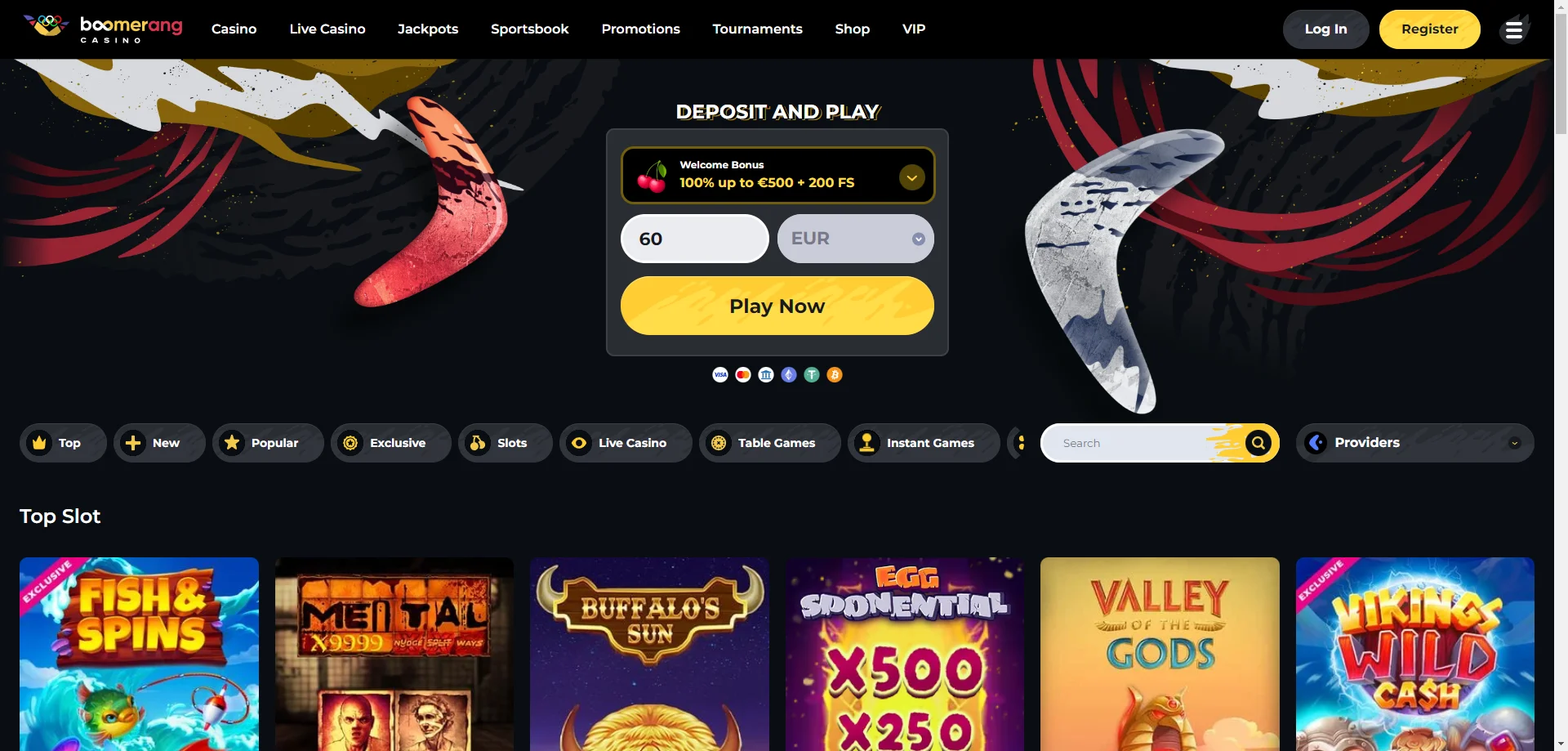
Their transparency goes deeper than the banner, into a thorough Cookie Policy. While I mostly worked with the interface, the policy document was available with all the legal and technical details for anyone who seeks them. This two-layer approach—simple summaries when you need to choose, and the full manual if you want it—suited me whether I was just gaming or doing a deep dive.
This whole process transformed how I use any website now. I eagerly look for these preference centres and use them. Boomerang Casino proved me a data-heavy business can still honor user privacy. The control they gave built more trust in their brand than any showy bonus ever could.
If you’re a player who cares about privacy, I can state Boomerang Casino offers you the tools to manage your data footprint. It lets you determine where you want the line between convenience and privacy to be, which makes the gaming experience not just enjoyable, but respectfully run.